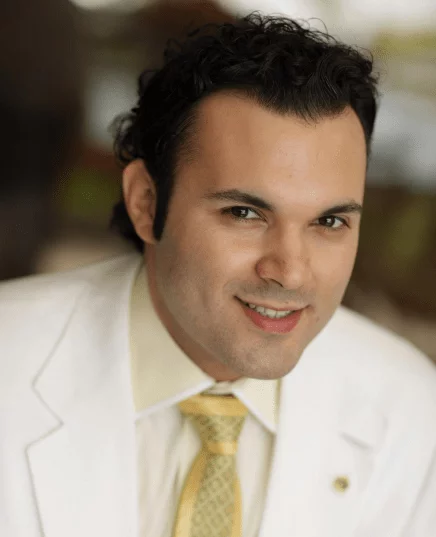
Written and medically reviewed by David Nazarian, MD — Board Certified in Internal Medicine and Medical Director of PRP Treatment Beverly Hills.
Quick answer: The best candidates for PRP hair treatment are usually patients with early to moderate, non-scarring hair loss who still have miniaturized but viable hair follicles. In my clinical experience, patients who come in while the hair is thinning—before an area becomes smooth and completely bald—tend to have the best opportunity to respond. PRP is not a guaranteed hair-regrowth treatment, and diagnosis matters because not every type of hair loss should be treated with PRP.
Who Is a Good Candidate for PRP Hair Treatment?
When I evaluate someone for PRP hair treatment, one of the first things I look at is how early the hair loss is and whether the follicles still appear to be present and miniaturized rather than absent.
“I often tell patients that a thinning follicle can be in limbo. It may not be functioning normally, but it may still be biologically active. Those are the patients I am most interested in treating early, before we lose that opportunity.” — David Nazarian, MD
That is an important distinction. PRP cannot reliably recreate a hair follicle that is no longer present. The goal is to support follicles that are still there but are becoming progressively smaller and producing thinner hairs.
Why Earlier Hair Loss Usually Gives Us a Better Opportunity
In androgenetic alopecia—male or female pattern hair loss—hair follicles gradually miniaturize. The hairs become finer, shorter, and less visible over time. Earlier in that process, there may still be a functioning follicular unit that can potentially respond to treatment.
This is why I usually prefer to treat patients before they have long-standing, smooth bald areas. The earlier we identify the pattern and begin an appropriate treatment plan, the more options we usually have.
PRP has been studied most extensively for androgenetic alopecia. Systematic reviews have found that PRP may improve hair density and other hair-growth measures in selected patients, although study protocols vary and the overall quality of evidence is not uniform. That variability is important: PRP should be presented as a treatment option, not a guaranteed cure.
How PRP May Help Miniaturized Hair Follicles
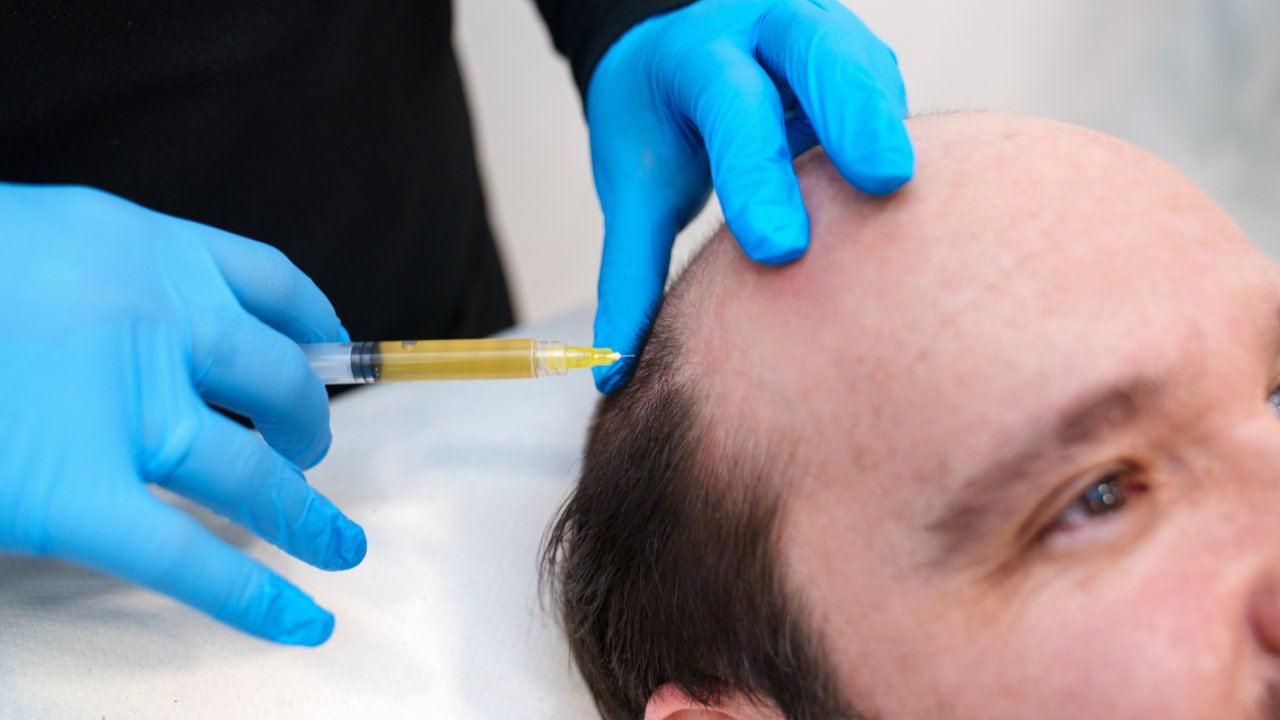
PRP is prepared from the patient’s own blood and contains a concentrated platelet fraction. Platelets release signaling molecules including growth factors and cytokines that are involved in tissue repair, vascular signaling, and cell-to-cell communication.
Researchers have proposed several mechanisms that may be relevant to hair follicles, including:
- Angiogenic signaling: PRP contains mediators such as VEGF and other growth factors that may support formation of new microvasculature and improve the local follicular environment.
- Follicular signaling: PRP has been associated with signaling pathways involved in cell survival, proliferation, and the hair-growth cycle, including Wnt/β-catenin, Akt/ERK, and related pathways.
- Support of the anagen phase: PRP may encourage susceptible follicles to enter or remain in the active growth phase longer.
- Controlled microtrauma from injection: The injections themselves create small, intentional tissue injuries. Microtrauma can initiate a local wound-healing response, increase growth-factor signaling, and may contribute to increased local blood flow and vascular response.
I explain this to patients in practical terms: we are trying to improve the environment around a follicle that is struggling, not manufacture a brand-new follicle where none remains.
Does PRP “Revive” Hair Follicles?
I use the word “revive” conversationally with patients because it is an easy way to explain the concept, but medically the process is more nuanced. A follicle affected by androgenetic alopecia may become progressively miniaturized and produce thinner hair fibers while remaining biologically active.
PRP may support that follicle through growth-factor signaling, angiogenesis, and changes in the local tissue environment. However, if an area has been completely bald for many years and there are few recoverable follicular units remaining, PRP is much less likely to produce meaningful regrowth.
Who Tends to Be the Best PRP Hair Candidate?
The patients I am most interested in evaluating for PRP are those with:
- Early or moderate androgenetic alopecia
- Progressive thinning rather than completely smooth bald areas
- Visible miniaturized hairs in the affected region
- Recent widening of the part or thinning of the crown
- Early recession with remaining follicular activity
- A realistic understanding that PRP may improve density or thickness but does not guarantee full restoration
Men and women can both be candidates. The treatment plan may differ depending on the pattern of hair loss, age, hormonal factors, pregnancy potential, medications, and whether medical therapy such as minoxidil or finasteride is also appropriate.
Who May Not Be a Good Candidate?
PRP should not be used as a reflex treatment for every person who reports hair loss. Patients may be poor candidates when the underlying problem is not androgenetic alopecia or when there is advanced loss with limited remaining follicular activity.
Examples include:
- Scarring alopecia: inflammatory scarring disorders can permanently destroy follicles and often require dermatologic evaluation and anti-inflammatory treatment.
- Active infection: fungal or bacterial scalp disease should be diagnosed and treated first.
- Uncorrected medical or nutritional causes: thyroid disease, iron deficiency, severe nutritional deficiency, medication effects, and systemic illness may need to be addressed.
- Alopecia areata: autoimmune patchy hair loss has a different treatment pathway; intralesional corticosteroid therapy such as Kenalog may be appropriate in selected cases.
- Long-standing smooth bald areas: if functional follicles are no longer present, PRP cannot be expected to recreate them.
For a broader explanation of these diagnoses, see our guide to alopecia causes and treatment.
Why Diagnosis Comes Before PRP
This is one of the most important points I want patients to understand: hair loss is a symptom, not a diagnosis.
Before recommending PRP, I want to know why the patient is losing hair. The pattern, rate of progression, scalp appearance, family history, medications, nutrition, recent illness, hormone history, and other medical factors all matter.
In some patients, evaluation may include dermoscopy, selected laboratory testing, fungal testing, or referral for scalp biopsy. A person with androgenetic alopecia should not be treated the same way as someone with alopecia areata, telogen effluvium, traction alopecia, or cicatricial alopecia.
PRP, Minoxidil, and Finasteride: Sometimes the Best Plan Is Combination Treatment
PRP does not necessarily replace established medical therapy. In appropriate patients, I may discuss combining PRP with treatments such as minoxidil or finasteride because they work through different mechanisms.
Minoxidil can support the hair-growth cycle, while finasteride reduces DHT-driven follicular miniaturization in appropriate male patients. PRP may provide an additional biologic stimulus. The best combination depends on the diagnosis and the individual patient.
For more detail, see our guide to finasteride, minoxidil, and PRP for hair loss and our article on how Rogaine/minoxidil works.
What About PRF for Hair Loss?
PRF hair treatment is another autologous blood-derived approach. It differs from PRP in preparation and in the fibrin matrix it contains. PRF is being studied for androgenetic alopecia, but the evidence base and treatment protocols remain less standardized.
I do not think the right question is simply “PRP or PRF—which is better?” The more important question is whether the patient has a type and stage of hair loss that is likely to benefit from a platelet-based treatment at all.
How Soon Should You Treat Hair Loss?
If you notice progressive thinning, widening of the part, reduced density at the crown, or early recession, I would rather evaluate it sooner than later. That does not mean everyone needs PRP immediately. It means we should identify the cause while more treatment options may still be available.
“With hair loss, time matters. I would rather see a patient when the follicles are miniaturizing than after an area has been completely bald for years.” — David Nazarian, MD
What Results Should You Expect?
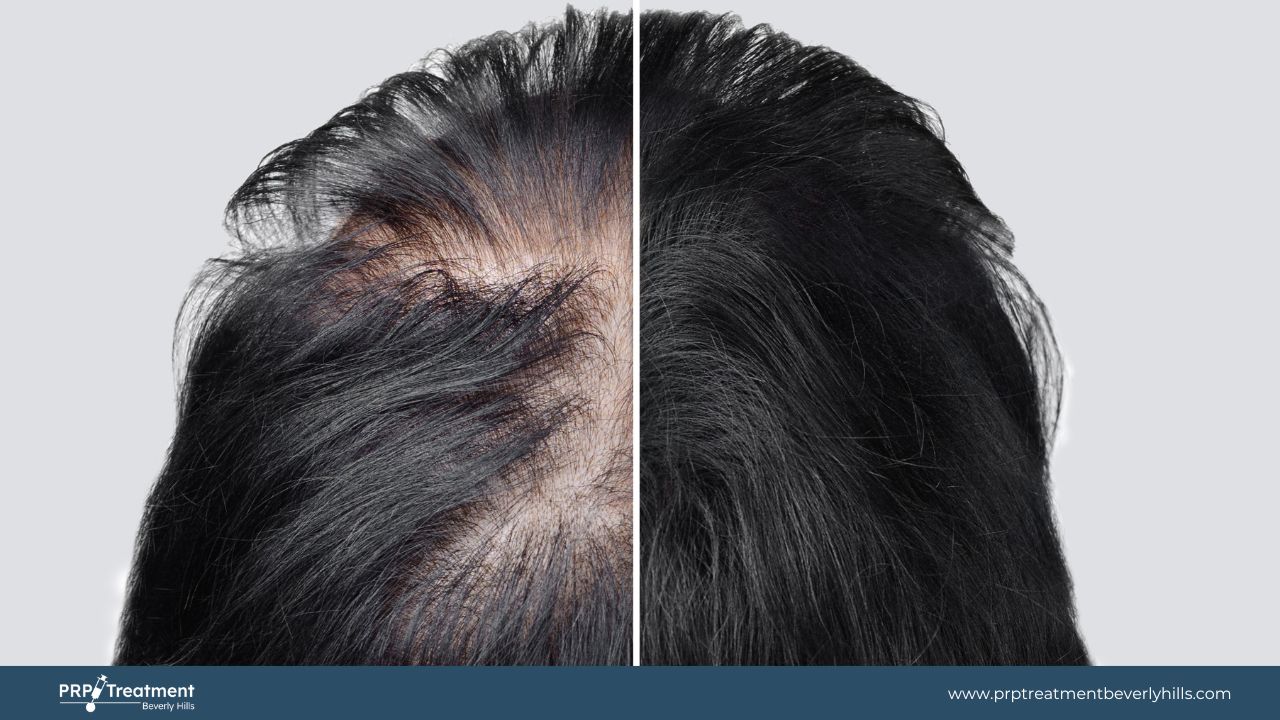
PRP results vary. Some patients may see improvement in shedding, hair caliber, or density over several months, while others may have little visible response. Multiple sessions are commonly used in published protocols, but there is no single universally accepted regimen.
We track progress with standardized photographs and reassess whether the treatment is producing a meaningful benefit. See our guide to PRP hair before-and-after results and timeline.
My Approach to PRP Hair Restoration in Beverly Hills
My approach is simple: diagnose first, treat early when appropriate, and avoid promising that PRP can restore hair in every patient.
The best candidate is usually not the person with the most advanced hair loss. It is often the person who notices that the hair is starting to thin and still has miniaturized follicles that may be capable of responding.
If you are considering PRP hair restoration in Beverly Hills or Los Angeles, the first step is an evaluation to determine the cause and stage of the hair loss and whether PRP, PRF, medical therapy, or another approach makes the most sense.
Frequently Asked Questions
Is PRP better for early hair loss?
Generally, PRP is more biologically plausible when miniaturized but viable follicles remain. Long-standing smooth bald areas are less likely to respond because PRP cannot reliably create new follicles where functional follicular units are absent.
Can PRP bring back dead hair follicles?
PRP should not be described as reliably bringing dead follicles back to life. It may support miniaturized or struggling follicles that are still biologically active, but it cannot be expected to recreate a completely absent follicle.
Does PRP increase blood flow to hair follicles?
PRP contains angiogenic signaling molecules, including VEGF, and proposed mechanisms include angiogenesis and vascular support around hair follicles. Injection-related microtrauma may also contribute to a local wound-healing response and circulation changes.
What type of hair loss responds best to PRP?
The strongest clinical evidence is for androgenetic alopecia, also called male or female pattern hair loss. Other types of hair loss require diagnosis-specific treatment.
Is PRP FDA-approved for hair loss?
No. PRP is not FDA-approved specifically as a treatment for androgenetic alopecia. Preparation methods and treatment protocols vary, which is one reason results differ across studies.
Medical References
- Donnelly C, et al. The role of platelet-rich plasma in androgenetic alopecia: a systematic review. J Cosmet Dermatol. 2024.
- Research Progress on Platelet-Rich Plasma in the Treatment of Androgenetic Alopecia. J Cosmet Dermatol. 2026.
- A Mechanistic Model of Platelet-Rich Plasma Treatment for Androgenetic Alopecia.
- The role of microtrauma in hair regrowth and regeneration in non-scarring alopecia.