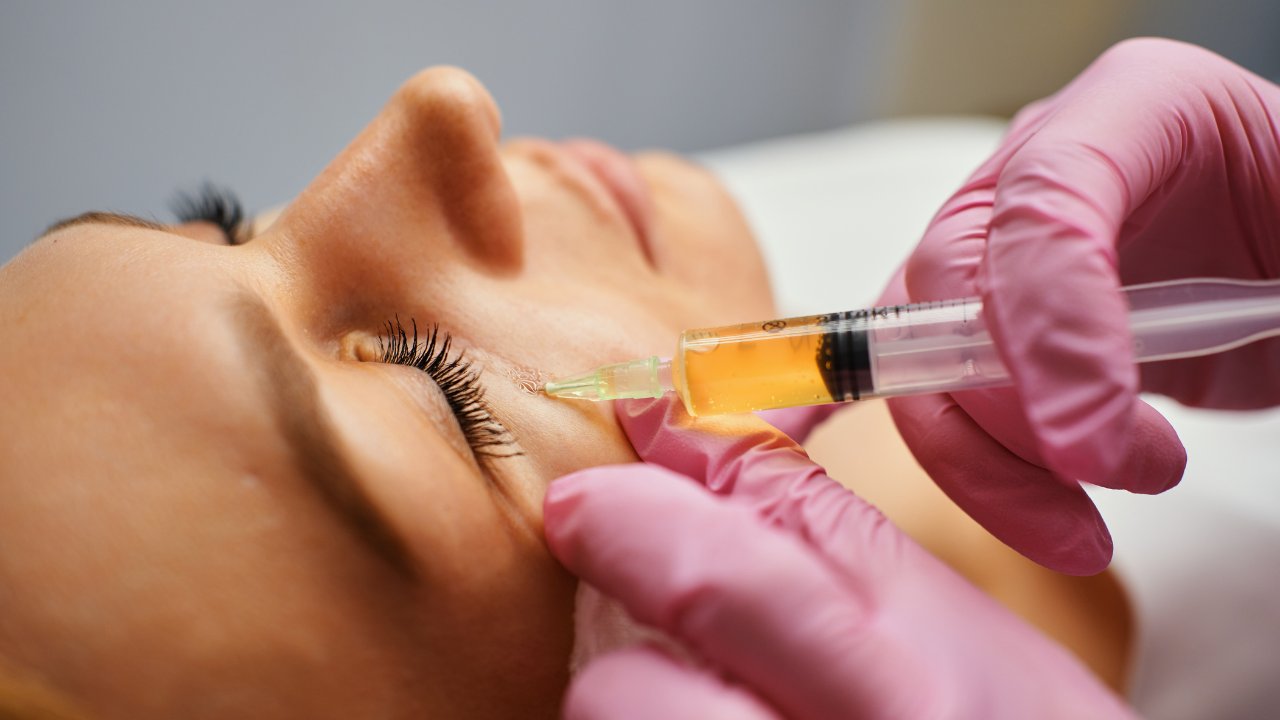
PRP and PRF are both autologous treatments (made from your own blood) used to improve the quality of under-eye skin. Think texture, crepiness, and dark-circle “shadowing” from thin skin, not instant filler-like volume.
In practice, many clinics quote ~6–12 months of visible improvement for both PRP and PRF, with PRP having a broader evidence base in aesthetic dermatology and PRF (especially injectable PRF/i-PRF) being newer but promising.
PRF is often described as having a slower, more prolonged release of growth factors compared with PRP, which is part of why people market it as “longer-lasting,” though under-eye data is still developing.
Key takeaways
- PRP = more studied in cosmetic dermatology; trials and reviews report temporary redness/swelling/bruising and gradual improvement.
- PRF/i-PRF = newer; research supports a slower/prolonged growth-factor release vs PRP, but under-eye evidence is smaller (case series + ongoing trials).
- Duration is variable (age, skin thickness, lifestyle, treatment plan). PRP rejuvenation results can last up to ~18 months in some settings, but many under-eye plans expect maintenance.
- Downtime is usually mild, but swelling/bruising can happen, especially under the eyes.
- Provider safety matters: PRP/PRF involves blood handling; choose a licensed, sterile clinical setting.
PRP vs PRF: what’s the difference (in plain science)
Both start with a blood draw and centrifuge step, but the “product” behaves a bit differently:
- PRP (Platelet-Rich Plasma): a platelet-concentrated plasma fraction. In aesthetic literature, PRP is used to support improvements in skin quality (texture, fine lines, tone), including the infraorbital area in some studies and reviews. (PMC)
- PRF / i-PRF (Platelet-Rich Fibrin): often described as a “second-generation” concentrate that includes a fibrin matrix (or injectable fibrin) and may provide a slower, more sustained release of growth factors over time compared with PRP. (PubMed)
What this means under the eyes:
- PRP is chosen when you want a well-established option with more published aesthetic usage.
- PRF/i-PRF is often chosen for a more gradual, “slow-release” approach, given that evidence for under-eye use is still emerging.
Duration & results: what to expect (timeline that matches real skin biology)
Days 1–3: Most common “recovery” window; swelling, redness, tenderness, and/or bruising can appear and then settle.
Weeks 2–6: Early visible changes often start (skin looks a bit brighter or smoother). PRP trials for facial skin show modest improvements after treatment, consistent with a gradual remodeling process.
Months 2–6: Many people see their best cosmetic changes here, especially for skin texture/crepiness.
Common mistakes (and fixes)
- Mistake: Expecting PRP/PRF to replace filler volume
Fix: Think skin quality first (texture/crepiness/dullness). If hollowness is the main issue, ask your clinician what’s appropriate for tear trough volume. - Mistake: Judging results too early (48 hours later)
Fix: Give it weeks to months; collagen/skin remodeling is gradual. - Mistake: “One session forever” mindset
Fix: Plan for a series + maintenance, especially under the eyes where skin is thin, and aging continues. - Mistake: Going bargain-hunting for a blood-based procedure
Fix: Choose a licensed medical setting with strong infection control. A CDC investigation linked unsafe PRP microneedling services at an unlicensed spa with likely HIV transmission—sterility and proper handling are non-negotiable. - Mistake: Not disclosing blood thinners or disqualifying medical history
Fix: Bring a full medication list + history. For PRP rejuvenation, AAD lists conditions where PRP isn’t recommended (e.g., Hepatitis C, HIV/AIDS, blood cancers, certain cardiovascular disease requiring blood thinners, skin cancer in the treatment area).
FAQs
1) Which lasts longer under the eyes: PRP or PRF?
Many clinics quote a similar range (~6–12 months) for both. PRF is often positioned as longer-lasting because it can provide a slower/prolonged release of growth factors, but under-eye evidence is still smaller than that for PRP.
2) When will I see results?
Commonly: subtle changes in weeks, best changes in months. That timeline matches what’s seen in PRP facial rejuvenation trials and reviews (gradual improvement).
3) Does PRP/PRF fix “dark circles”?
It can help when dark circles are related to thin skin, texture, and quality. A review of infraorbital dark circles lists PRP as a treatment option, depending on the cause.
4) Does PRF work like filler?
Not exactly. It’s better described as biostimulation/skin-quality support rather than immediate volumization.
5) Is swelling or bruising normal?
Yes. Temporary pain, swelling, bruising, redness, and irritation are commonly described after PRP injections and typically resolve within hours to days (sometimes longer under-eyes).
6) Is PRF “more effective” than PRP?
For skin quality, the answer depends on protocol, baseline skin, and how outcomes are measured. Reviews compare PRP and PRF in facial rejuvenation, but direct, head-to-head evidence under the eyes remains limited.
7) Is there published under-eye PRF/i-PRF research?
Yes, but it’s smaller. Example: an i-PRF + hyaluronic acid lower-eyelid case series reported predicted immediate swelling and described the approach as safe/feasible; and registered clinical trials are studying PRF in tear trough rejuvenation.
Want a recommendation that actually fits your under-eye concern? Book a consultation and ask for a plan that clarifies the PRP vs PRF choice, number of sessions, expected duration, downtime, and safety protocols (sterility and blood handling).
Sources
- American Academy of Dermatology — PRP rejuvenation: who it’s not recommended for; duration up to ~18 months
https://www.aad.org/public/cosmetic/younger-looking/platelet-rich-plasma-secret-to-younger-skin
- Johns Hopkins Medicine — PRP injections: low allergy risk; less common risks include bleeding, tissue damage, infection, nerve injuries
https://www.hopkinsmedicine.org/health/treatment-tests-and-therapies/plateletrich-plasma-prp-treatment
- AAOS OrthoInfo — PRP overview; injection risks discussed (infection/tissue/nerve injury similar to other injections)
https://orthoinfo.aaos.org/en/treatment/platelet-rich-plasma-prp/
- Alam M, et al. (2018) JAMA Dermatology — PRP injection for photoaged facial skin (randomized clinical trial) [PubMed]
https://pubmed.ncbi.nlm.nih.gov/30419125/
- Xiao H, et al. (2021) Systematic review — PRP in facial rejuvenation (open access)
https://pmc.ncbi.nlm.nih.gov/articles/PMC8606573/
- Diab NAF, et al. (2023) PRF vs PRP: prolonged growth factor release discussion [PubMed]
https://pubmed.ncbi.nlm.nih.gov/36520210/
- Nagaja SA, et al. (2024) Injectable PRF + hyaluronic acid for lower eyelids (case series) [PubMed]
https://pubmed.ncbi.nlm.nih.gov/39360098/
- ClinicalTrials.gov — Platelet Rich Fibrin for Tear Trough Rejuvenation (registered study)
https://clinicaltrials.gov/study/NCT03313934
- CDC MMWR (2024) — Investigation of presumptive HIV transmission associated with PRP microneedling facials at an unlicensed spa (safety/infection-control importance)