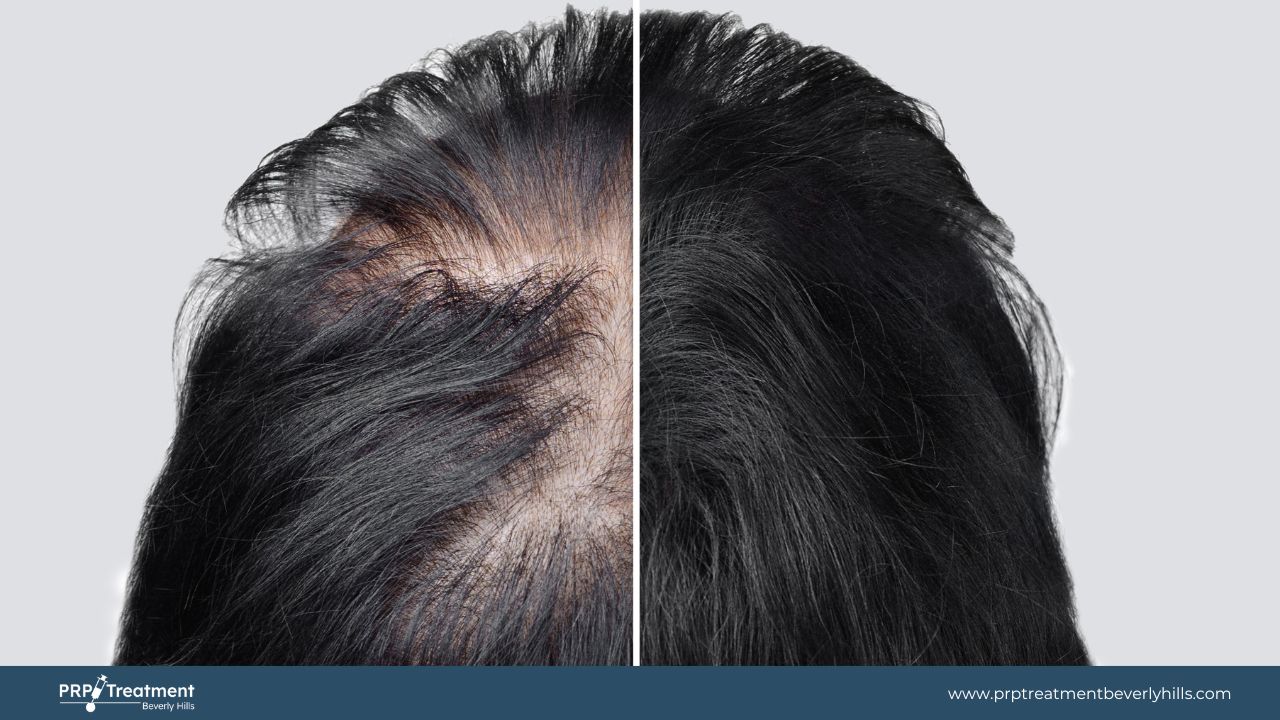
PRP hair treatment is a minimally invasive option studied most extensively for androgenetic alopecia. It uses a patient’s own blood to prepare a platelet-rich product, but response varies and meaningful improvement is not guaranteed.
Medically reviewed by David Nazarian, MD — Board Certified in Internal Medicine and Medical Director of PRP Treatment Beverly Hills.
PRP has been studied most extensively for androgenetic alopecia. Systematic reviews suggest that some patients experience improved hair density, but the studies are highly heterogeneous and overall certainty is limited. A single universal “success rate” should therefore be avoided.
What Is the Success Rate of PRP Hair Treatment?
Dr. Nazarian’s perspective: I do not give patients one percentage and call it the PRP success rate. The chance of improvement depends on whether the diagnosis is appropriate, how early the hair loss is, whether miniaturized follicles are still present, and whether other contributors to hair loss are being addressed.
PRP is a minimally invasive option studied for androgenetic alopecia. Some randomized trials and meta-analyses report increased hair density, but protocols, platelet preparation, session schedules, outcome measures, and study quality vary substantially.
Individual studies have reported improvements in hair-density measures after PRP, but results cannot be reduced to a single reliable success-rate percentage. Systematic reviews note substantial variation in PRP preparation, treatment schedules, outcome measures, patient selection, and study quality.
Treatment response varies with the underlying diagnosis, patient selection, PRP preparation method, injection protocol, concurrent therapies, and other medical factors.
What Factors May Influence PRP Hair Treatment Response?
Several factors may influence the likelihood and degree of response to PRP hair treatment:
Use of the patient’s blood
PRP hair treatment uses a patient’s own blood to prepare a platelet-rich product containing signaling proteins involved in tissue repair. Autologous preparation reduces concerns about donor-material reactions, but injection-related risks and lack of benefit remain possible.
Stimulation of hair follicles
Platelet-derived signaling proteins are injected into the scalp with the goal of influencing viable follicles, but proposed mechanisms do not guarantee clinical regrowth.
Minimally invasive
PRP hair treatment is a minimally invasive procedure that does not require incisions or surgical intervention, making it a preferred option for many patients.
Non-toxic
PRP is prepared from the patient’s own blood. This avoids exposure to donor blood products, but it does not eliminate risks related to blood drawing, preparation, scalp injections, infection, bleeding, pain, or lack of benefit.
Customizable
PRP hair treatment can be customized to the individual patient’s needs and goals. The practitioner can adjust the concentration of growth factors to suit the patient’s specific needs and goals.
Is PRP Always Successful?
PRP does not work for everyone. Response varies with the diagnosis, degree of follicle miniaturization, treatment protocol, medical factors, and concurrent hair-loss therapies. Current evidence does not support quoting one universal success rate. Systematic reviews generally find improvement in hair density in selected androgenetic alopecia patients, but protocols, patient selection, outcome measures, and study quality vary substantially.
The success of PRP hair treatment depends on several factors, including:
- The expertise of the practitioner
- The quality of the equipment used
- The individual’s overall health and medical history
- The cause of hair loss
PRP hair treatment is relatively new, and limited long-term research is still available. As with any medical procedure, there is no guarantee of success, and it is essential to have realistic expectations.

Is PRP Better Than Minoxidil?
Current evidence does not establish that PRP is universally better than minoxidil. Minoxidil remains an established treatment for androgenetic alopecia, while PRP may be considered as an adjunct or alternative in selected patients. Comparative studies remain limited and heterogeneous.
Minoxidil is an established topical treatment for androgenetic alopecia and is available over the counter in several formulations. Its exact mechanism is not fully defined, and response varies by patient, treatment area, and consistency of use.
While PRP treatment and minoxidil can effectively promote hair growth, there are some critical differences between the two. Minoxidil is a topical solution that can be applied at home, while PRP treatment is a medical procedure performed in a clinic or medical setting. PRP is an autologous, minimally invasive procedure, using the patient’s blood, while minoxidil contains chemicals.
In conclusion, PRP treatment and minoxidil can effectively promote hair growth, and the best option depends on several factors, including the cause of hair loss and the individual’s specific needs and goals. It is essential to discuss your options with a qualified and experienced practitioner to determine the best course of action.
Why Am I Losing More Hair After PRP?
Dr. Nazarian’s perspective: When a patient tells me they are shedding more hair after PRP, I do not automatically assume the PRP caused it or that it is a normal part of treatment. I look at the timing, the underlying diagnosis, recent illness or stress, medication changes, nutrition, and whether the androgenetic alopecia itself may still be progressing.
Quick answer: Increased shedding after PRP can occur for reasons unrelated to the injection itself, including telogen effluvium, progression of androgenetic alopecia, illness, stress, nutritional deficiency, medication changes, or normal hair-cycle fluctuation. Persistent or substantial shedding should be evaluated rather than automatically labeled a normal PRP response.
Temporary shedding may occur around the time of PRP, but increased hair loss should not automatically be assumed to be a normal treatment effect. If shedding is substantial, persistent, or new, the underlying diagnosis and other triggers—such as telogen effluvium, medication changes, illness, nutritional deficiency, or progression of androgenetic alopecia—should be reassessed.
Overstimulation of hair follicles
Some patients report temporary shedding around the time of treatment, but increased shedding should not automatically be assumed to be a normal PRP effect. Persistent or substantial shedding should prompt reassessment of the underlying hair-loss diagnosis and other possible triggers.
Improper technique
Persistent or increased shedding after PRP should prompt reassessment of the underlying hair-loss diagnosis and other possible triggers. Injection technique matters for safety, but worsening hair loss should not automatically be attributed to technique alone.
Underlying medical condition
Hair shedding can also reflect a separate process such as telogen effluvium, thyroid disease, iron or nutritional deficiency, significant weight loss, recent illness, hormonal changes, or a medication effect. This is why persistent shedding deserves a fresh diagnostic look rather than simply more PRP.
For patients wondering whether their follicles are still good candidates for treatment, see who is a good candidate for PRP hair treatment.
An underlying medical condition, such as an autoimmune disorder, hormonal imbalance, or nutritional deficiency, can cause hair loss. PRP treatment may not be effective if you have an underlying medical condition contributing to your hair loss.
Side effects
While PRP treatment is generally considered safe, some patients may experience side effects, such as redness, swelling, or pain at the injection site. These side effects typically resolve within a few days.
How to Find the Right PRP Hair Treatment Provider
When choosing a PRP hair treatment provider, look for a clinician who evaluates the cause of hair loss, discusses realistic expectations, explains the preparation and injection protocol, reviews alternatives, and provides appropriate follow-up. Before-and-after photographs can be helpful when presented with consistent lighting and without implying guaranteed results.
Choosing a trusted and qualified provider is essential, as the success of PRP hair treatment depends on several factors, such as the practitioner’s expertise, the quality of the equipment used, and the individual’s overall health and medical history.
Does Hair Regrow After PRP Treatment?
Some patients with selected forms of non-scarring hair loss, particularly androgenetic alopecia, may experience improved hair density or thickness after PRP. Regrowth is not guaranteed, and PRP is unlikely to restore hair where follicles are no longer viable.
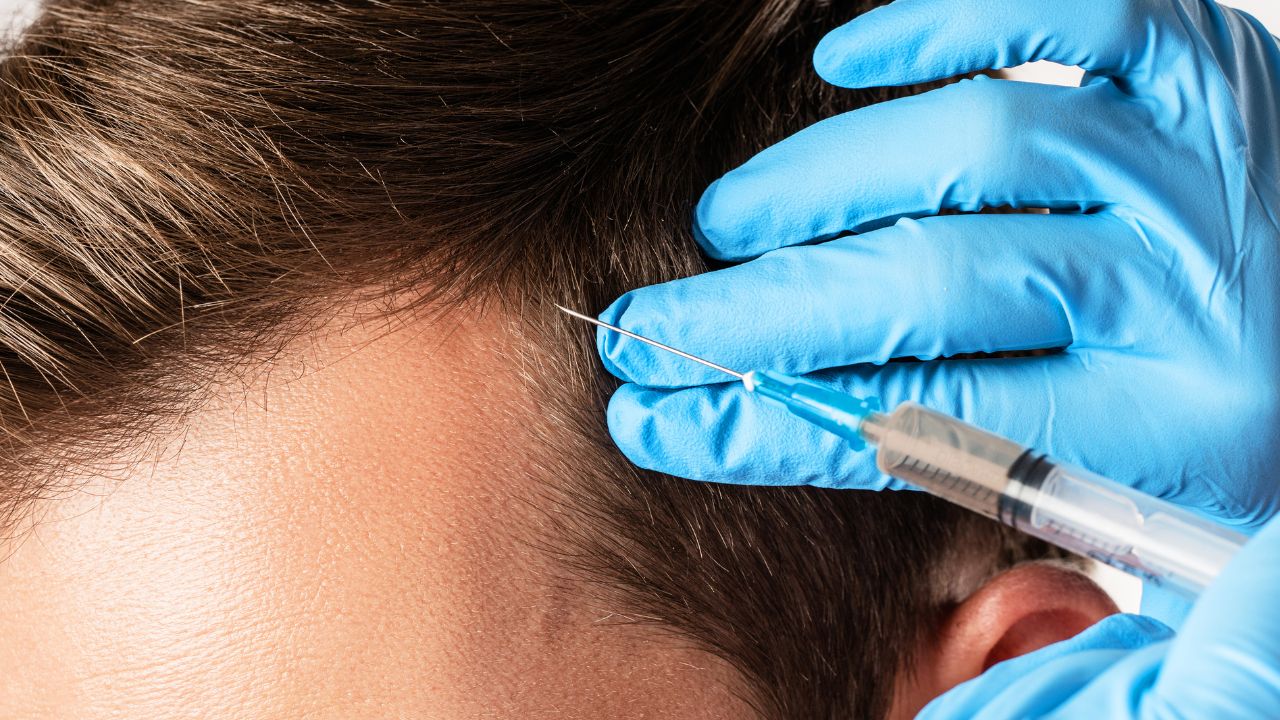
Many patients experience regrowth after undergoing PRP hair treatment. However, the results can vary depending on several factors, including the cause of hair loss and the individual’s overall health and medical history.
Final Words
PRP may improve hair density in selected patients with androgenetic alopecia, but response varies and treatment is not guaranteed. For candidacy, pricing, risks, alternatives, and physician-supervised treatment planning, see our PRP treatment for hair loss and hair restoration page.
Before undergoing PRP hair treatment, it is important to consult with a qualified and experienced practitioner to determine if the procedure is right for you. The practitioner will consider factors such as the cause of hair loss, your overall health and medical history, and your specific goals and expectations.
For appropriately selected patients, PRP may be considered as part of an individualized hair-loss treatment plan. The potential benefit, limitations, alternatives, and expected timeline should be reviewed before treatment.