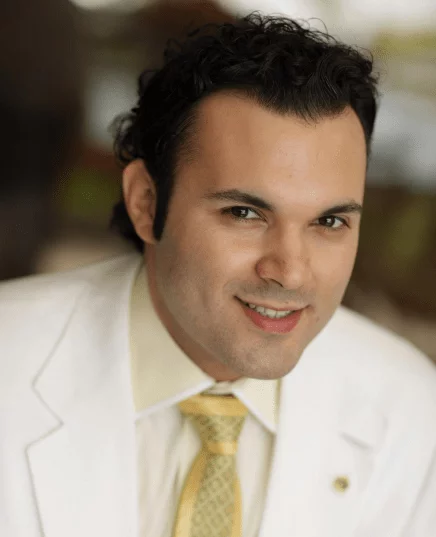
By David Nazarian, MD — Board Certified in Internal Medicine
For the clinical treatment overview, candidacy, process, risks and pricing, see our PRP Hair Treatment & Restoration in Los Angeles & Beverly Hills service page.
A large number of men come to my office concerned about thinning hair or progressive hair loss. I have used platelet-rich plasma, or PRP, as one treatment option for appropriately selected patients, but one of the most important things I explain is that PRP is not equally effective for everyone.
The first question I ask is not simply whether someone wants PRP. It is: why is this patient losing hair?
Before PRP, I want to understand the cause of the hair loss
Hair loss is not always simply genetic male-pattern hair loss. In some patients, there may be other factors contributing to shedding or thinning that they are not aware of. Depending on the history and examination, I may evaluate for issues such as iron or other nutrient deficiencies, vitamin deficiencies, thyroid or hormonal abnormalities, medications, significant stress, poor sleep, recent illness, weight changes, or other medical conditions.
When appropriate, I use blood testing to look for potentially correctable contributors. My goal is not simply to inject the scalp while ignoring a problem that may be contributing to the hair loss in the first place.
Who tends to respond better to PRP?
In my experience, PRP tends to make the most sense in patients who still have viable, miniaturizing hair follicles rather than areas where follicles have been absent for a long period of time.
This distinction matters. PRP should not be presented as a way to recreate hair follicles that are no longer viable. Once an area has advanced to longstanding complete follicular loss, the likelihood of meaningful regrowth from PRP alone is substantially lower.
This is one reason I generally prefer to intervene earlier in the hair-loss process rather than waiting until the scalp has been bald for many years.
What is PRP trying to do?
PRP contains platelets and a mixture of signaling proteins and growth factors. Laboratory and clinical research suggests that these factors may influence cellular signaling around the hair follicle and may support the activity of follicles that are still present.
Scalp injections also create a local tissue response, and researchers have studied whether PRP may influence vascular signaling and blood supply around the follicle. These biological mechanisms are still being investigated, and they should not be interpreted to mean that PRP can reliably regenerate a dead hair follicle.
What matters clinically is whether a patient still has follicles capable of responding.
Hair growth takes time
One of the most common misconceptions I hear is, “When am I going to see the new hair?” Some patients expect a visible change within several weeks. Hair biology simply does not move that quickly.
Hair follicles cycle through different phases, and changes in density, thickness, or shedding generally need to be evaluated over months—not days or weeks.
I usually tell patients that early changes may take several months to appreciate, while a more meaningful assessment of response often occurs around 6 to 12 months.
That is also why I encourage patients not to judge the treatment after one month.
Why I often begin with three treatments
For many patients, my initial protocol is a series of approximately three PRP treatments spaced about one month apart, although the schedule can vary depending on the patient’s diagnosis and clinical situation.
The rationale is to provide a concentrated initial treatment period while the follicles are being exposed to repeated platelet-derived signaling factors.
After that initial series, I generally give the hair time to respond. Some patients later choose maintenance treatment at approximately six months or one year, but I do not believe that every patient should automatically be placed on the same maintenance schedule. I look at the patient’s response, pattern of hair loss, other treatments being used, and overall goals.
My overall approach
For me, PRP hair restoration is not simply an injection procedure.
- Why is this patient losing hair?
- Are there correctable medical or nutritional factors?
- Are the follicles still viable?
- Is this the type of hair loss that is reasonably likely to respond?
- Are we setting realistic expectations?
- Should PRP be used alone or alongside another evidence-based hair-loss treatment?
The patients who tend to be happiest are the ones who understand from the beginning that hair restoration is a process and that PRP is one tool within a broader treatment strategy—not a guaranteed or immediate cure.
For more information about evaluation, candidacy, treatment planning, pricing and what to expect, visit our PRP Hair Treatment & Restoration in Beverly Hills & Los Angeles page.
Individual results vary. This article is educational and does not replace an individualized medical evaluation.