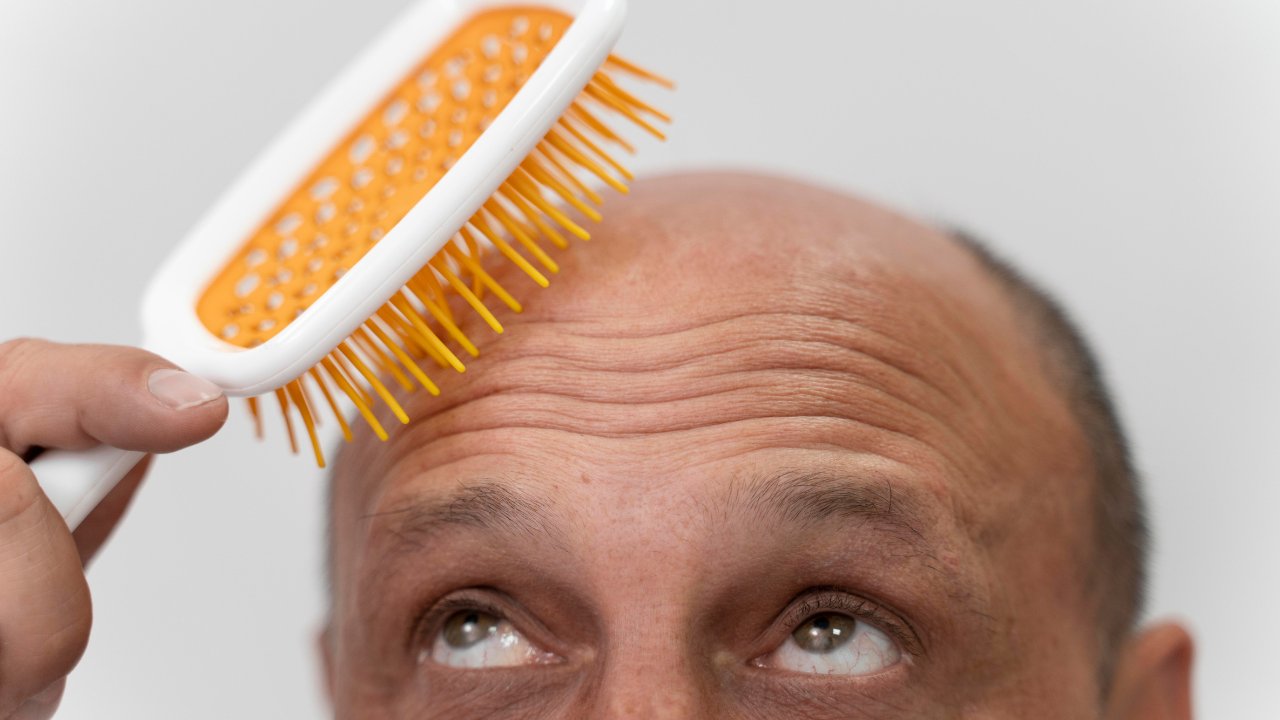
Hair loss rarely happens overnight, but when it creeps up, widening parts, a receding hairline, thinning temples, etc., it can feel like it’s accelerating faster than you can react. For many men and women, that early shedding turns into visible baldness on the scalp, and in time, full bald patches. It’s emotionally exhausting and frustrating, especially when you’ve tried everything from over-the-counter products to miracle oils with zero results.
What happens when hair loss is no longer mild or moderate, but advanced? Can Platelet-Rich Plasma (PRP) therapy help at that stage, or is it too late?
This article dives into everything you need to know about PRP and whether it can help when you’re already bald or close to it.
What Is PRP Therapy and How Does It Work?
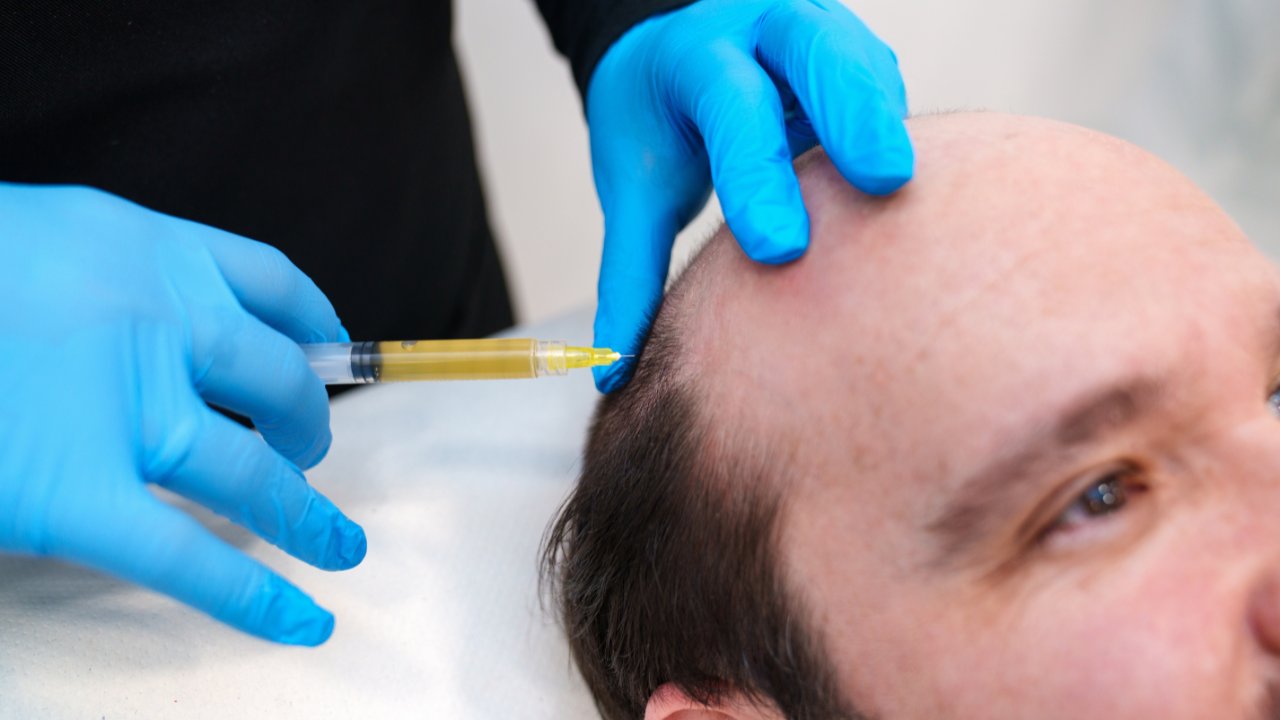
Platelet-Rich Plasma (PRP) therapy is a regenerative treatment that uses your own blood to stimulate healing and hair follicle activity. Here’s the breakdown:
- A small amount of your blood is drawn
- It’s spun in a centrifuge to separate the plasma rich in platelets
- This PRP is then injected into areas of the scalp where hair is thinning or shedding
Platelets are packed with growth factors: natural proteins that help accelerate healing, stimulate cell growth, and boost tissue regeneration. For hair loss, these growth factors are believed to:
- Improve blood supply to hair follicles
- May influence viable miniaturized follicles in selected patients
- Strengthen existing hair
- Prolong the growth phase of the hair cycle
PRP is an autologous, minimally invasive treatment prepared from the patient’s own blood. Clinical response depends on the diagnosis, stage of hair loss, remaining follicle viability, treatment protocol, and concurrent therapies.
PRP and Advanced Hair Loss: Is It Too Late?
PRP is most effective when hair loss is in the early to moderate stages of development. If you’re noticing thinning at the crown or receding around the temples, that may be a stage when PRP is considered, depending on diagnosis and remaining follicle viability. But what about when you’ve already lost a significant amount of hair?
The results are more nuanced.
If you’re in the advanced stages of androgenetic alopecia (male or female pattern baldness), PRP can still help, but only if there are still viable follicles present. When a scalp area is completely bald and shiny, it often indicates that the follicles have atrophied or scarred over, meaning they can no longer produce hair. In such cases, PRP alone won’t be enough.
If hair loss is more recent and viable miniaturized or vellus hairs remain, PRP may be considered because some studies suggest improvement in hair density or shaft thickness in selected patients. It cannot recreate absent follicles, and response varies by diagnosis, degree of miniaturization, and other factors.
Does PRP Work If You’re Already Bald?
Let’s answer this directly: If you’re completely bald with no remaining follicles in the area, PRP will not regrow hair.
But it’s not always so black and white.
Some people who describe an area as “bald” still have miniaturized hairs or viable follicles. PRP may be considered when viable follicles remain, but it should not be described as reviving absent follicles. Candidacy should be based on clinical examination and diagnosis rather than a specific Norwood or Ludwig stage alone.
So while PRP won’t regrow hair in slick bald patches, it can:
- Increase hair density in thinning zones
- Thicken remaining strands
- Improve scalp health for future treatments like hair transplants
Alternatives and Enhancements for Severe Baldness
If PRP on its own isn’t enough, consider combining it with other approaches:
1. Hair Transplant Surgery
Hair transplantation may be considered for selected patients with extensive pattern hair loss and suitable donor hair. PRP is sometimes used around transplant procedures, but evidence for improving graft survival, healing, or final cosmetic outcomes is variable and should not be presented as guaranteed.
2. Scalp Micropigmentation (SMP)
This non-surgical option uses pigment to replicate the appearance of short or shaved hair. It doesn’t regrow hair but gives the illusion of density.
3. Topical Medications
Minoxidil and finasteride are evidence-based options for selected patients with androgenetic alopecia. PRP may be used as an adjunct in some treatment plans, but combination benefit varies and should not be assumed to be additive for every patient.
4. Microneedling with PRP
Microneedling enhances PRP absorption and stimulates collagen production. This combination improves circulation and boosts follicular activity.
5. Exosome Therapy
Still under clinical investigation, exosome therapy utilizes cellular messengers to stimulate hair regeneration. In some advanced clinics, it’s paired with PRP for enhanced results.
Can You Take PRP for Lifetime Hair Loss Management?
Long-term treatment planning should be individualized. PRP is not a permanent cure for androgenetic alopecia, and the need for repeat treatment depends on diagnosis, response, concurrent therapy, and patient goals.
Typical PRP Treatment Plan:
- Initial treatment schedule: varies by protocol and clinical response
- Maintenance: individualized; there is no universal evidence-based interval
Androgenetic alopecia can continue to progress over time regardless of whether PRP is used. Repeat treatment should be individualized based on response, diagnosis, concurrent therapy, cost, and patient goals rather than assumed to be routinely necessary.
Who Is an Ideal Candidate for PRP?
You may be a good fit for PRP if you:
- Have early to moderate hair thinning
- Still have visible or dormant follicles
- Are in good health with no bleeding disorders
- Prefer an autologous, office-based option after reviewing established treatments
- Want to complement other treatments like transplants or medications
PRP may not be suitable if:
- You are fully bald with no remaining follicles
- You have certain blood or autoimmune conditions
- You expect full regrowth from PRP alone
Consultation and scalp analysis with a qualified specialist can determine if you’re a candidate.
Frequently Asked Questions
Can PRP help grow hair if I’m completely bald?
Not likely. PRP requires existing hair follicles to be effective. If follicles are gone, PRP won’t bring them back.
How long does PRP last?
There is no universal evidence-based duration for PRP hair results. Any benefit may diminish over time as the underlying hair-loss process continues, and repeat treatment should be based on individual response rather than a fixed interval.
What are the side effects of PRP?
Side effects are minimal and usually limited to swelling, redness, or tenderness at the injection sites. Because PRP is autologous (from your own blood), allergic reactions are rare.
Does PRP hurt?
Most patients describe it as mildly uncomfortable. Numbing cream is usually applied to minimize any pain.
How many sessions do I need?
Session number and timing vary by protocol, diagnosis, and response. There is no single schedule that is appropriate for every patient.
Final Verdict: Is PRP Worth It for Advanced Baldness?
It depends on how advanced your hair loss truly is. PRP may be useful for selected patients, but it is not a cure-all. If you’re completely bald with no signs of remaining follicles, PRP won’t reverse that. However, if you’re in the earlier stages of advanced hair loss, or if you’re looking to support other interventions like a transplant, PRP can be an effective part of a comprehensive strategy.
The best way to know for sure is to schedule a professional evaluation. A scalp analysis can determine the presence of viable follicles, and a treatment plan can be tailored based on your unique pattern of hair loss.
Considering PRP in Beverly Hills?
If you’re dealing with hair loss and want real, medically backed solutions, our PRP Treatment Beverly Hills clinic offers advanced PRP therapy tailored to your needs.
Book a consultation today to find out if you’re a candidate. Get expert scalp analysis, personalized treatment, and care from professionals who specialize in hair restoration.
Don’t wait for it to get worse. Start your hair recovery today.