...
Yelp Logo

CALL US NOW +1-844-669-0939

How Technology Is Transforming Patient Care in Ambulatory Treatment Centers

The operational dynamics of outpatient care are undergoing a massive technical restructuring. As an industry consultant who has spent the last ten years optimizing outpatient workflows, I can tell you that the days of treating technology as a back-office luxury are completely gone. Today, the intersection of clinical software and operational infrastructure dictates the quality of patient outcomes and, frankly, whether a facility stays solvent. Navigating these systems requires a cold, hard look at clinical reality, particularly regarding how administrative health dictates patient experience. For instance, when looking at the systemic bottlenecks in same-day surgery setups, a facility must align its electronic health records directly with dedicated asc medical billing systems to avoid delayed authorizations that directly stall patient care.

When you eliminate operational friction, clinical care succeeds. The technology deployed in modern ambulatory treatment centers (ATCs) must be viewed through a pragmatic lens: does it save time, does it reduce clinical error, and does it lower overhead?

Clinical Workflow Optimization

Implementing modern digital platforms inside an independent clinic requires strict adherence to lean design principles. Every minute an active nurse spends clicking through nested menus is a minute lost to direct patient monitoring. In my decade of consulting, I have seen poorly configured Electronic Health Records (EHR) systems actively cause clinical burnout and compromise patient safety.

  • Interoperable EHR systems eliminate chart redundancy.
  • Real-time tracking reduces patient rooming wait times.
  • Digital intake forms eliminate paper transcription errors.
  • Automated text reminders drop no-show rates significantly.

“The configuration of specialized healthcare IT architecture is no longer just an IT concern; it is the primary bottleneck or accelerator of modern outpatient clinical throughput,” notes operations expert Marcus Vance in his 2024 manual The Lean Outpatient Clinic. If your clinical staff is bogged down by technical administrative hurdles, the patient experiences a fragmented, uncoordinated care pathway.

Remote Monitoring and Care Continuity

Ambulatory care no longer concludes the moment a patient walks out the front door. The rise of connected physiological sensors has stretched the clinical perimeter directly into the patient’s home.

  • Wearable pulse oximeters track post-operative respiratory trends.
  • Cellular-enabled blood pressure cuffs automatically flag spikes.
  • Cloud-based patient portals transmit wound photos instantly.
  • Continuous glucose monitors reduce outpatient diabetic emergencies.

This continuous stream of objective data allows ambulatory teams to intervene before a minor post-operative deviation turns into an expensive emergency room readmission. However, don’t assume that streaming data automatically equals better care. If the facility doesn’t have automated algorithmic sorting to filter out false alerts, clinical teams face severe alarm fatigue. According to Dr. Elena Rostova in The Connected Patient Ecosystem, “Continuous data streams without automated, rule-based triaging create a liabilities nightmare for outpatient clinical staff.”

Financial Integrity and the Site-Neutral Shift

The operational reality of running an ambulatory center is governed by a simple truth: outpatient reimbursement margins are razor-thin compared to major hospital systems. According to official data from the Centers for Medicare & Medicaid Services (CMS), Medicare typically reimburses standalone ambulatory surgical centers at roughly 55% of the rate paid to hospital outpatient departments for the exact same medical procedure [1].

To protect patient care, an ambulatory center must maintain absolute administrative efficiency. If a billing team relies on manual code entry or outdated scrubbing clearinghouses, claim denials skyrocket, cash flow dries up, and the facility is forced to cut clinical support staff. Modern centers use automated charge capture systems that map clinical documentation directly to appropriate ICD-10 and CPT codes in real time. This technical bridge directly prevents common authorization bottlenecks that delay essential surgeries.

Structural Comparison: Traditional vs. Tech-Enabled Ambulatory Centers

Operational Vector Traditional Ambulatory Infrastructure Tech-Enabled Ambulatory Infrastructure
Patient Check-In & Intake Manual clipboards; paper verification [4] Digital kiosks; automated eligibility check
Surgical Scheduling Excel sheets; manual block time allocation Predictive algorithmic block time optimization
Post-Operative Tracking Scheduled follow-up phone calls [2] Continuous remote physiological monitoring
Supply Chain Operations Periodic manual inventory counts [5] RFID-tagged automated reorder systems
Revenue Cycle Flow Batch coding; high retrospective denials Real-time clinical documentation code mapping

Technical Hurdles and Practical Realities

We should not pretend that dropping new software into an ambulatory setting is easy. The single greatest point of failure I encounter in the field is systemic fragmentation. A facility will purchase a top-tier scheduling tool, a separate clinical charting system, and an isolated billing platform, completely failing to build a functional API bridge between them.

  • Siloed software databases create dangerous information blindspots.
  • Legacy servers expose networks to encryption attacks.
  • Uncalibrated diagnostic hardware feeds incorrect metrics upstream.
  • Poor staff training renders expensive features completely useless.

If your systems do not talk to each other, your staff will find manual workarounds that bypass security protocols. You must build an integrated technical architecture where data flows seamlessly from the initial point of patient access through the entire clinical encounter, ending in an accurate, clean claim submission.

“True medical technology value is realized only when the system actively removes keystrokes from a clinician’s daily routine, rather than adding them,” states industry analyst Arthur Pendleton in Outpatient Architecture Vol. 4.

When you design an ambulatory technology stack, prioritize simplicity and native integration over flashy, unproven features. Focus heavily on stable data pipelines that keep your clinical teams focused on the patient rather than the screen.

Cortisol and Hair Loss: Causes, Signs, and Regrowth

High cortisol and hair loss are often linked because prolonged stress can disrupt the body’s normal repair rhythm. The body makes cortisol through the adrenal glands, and this hormone helps you respond to pressure, manage energy, and control inflammation.

Cortisol is useful in small amounts, but long-term elevation can affect sleep, immunity, skin health, and shedding patterns. Cortisol levels and hair loss do not always move together, so it helps to consider timing, symptoms, and other possible causes before assuming a single trigger.

Can High Cortisol Cause Hair Loss?

Yes, it can contribute to hair loss, especially when stress lasts for weeks or months. When cortisol stays elevated, the body may shift energy away from nonessential functions.

This can affect hair follicles and interrupt the hair growth cycle. Some research suggests that prolonged stress signaling may keep growth-supporting cells in a resting phase, delaying new growth after shedding.

Because high cortisol levels may also worsen inflammation, sleep quality, appetite, and recovery, shedding can become more noticeable.

How Does Stress Disrupt Growth?

The most common pattern is telogen effluvium. This means more strands than usual enter the shedding stage at the same time. It often starts two to three months after a major stressor, illness, surgery, crash diet, or emotional shock.

This form of stress-related hair loss usually looks diffuse. You may see more hair in the shower, on your pillow, or in your brush. The affected hairs often shed across the scalp rather than from one clear bald spot. This type of stress-related hair loss can improve once the trigger is controlled, but regrowth takes time because hair grows slowly.

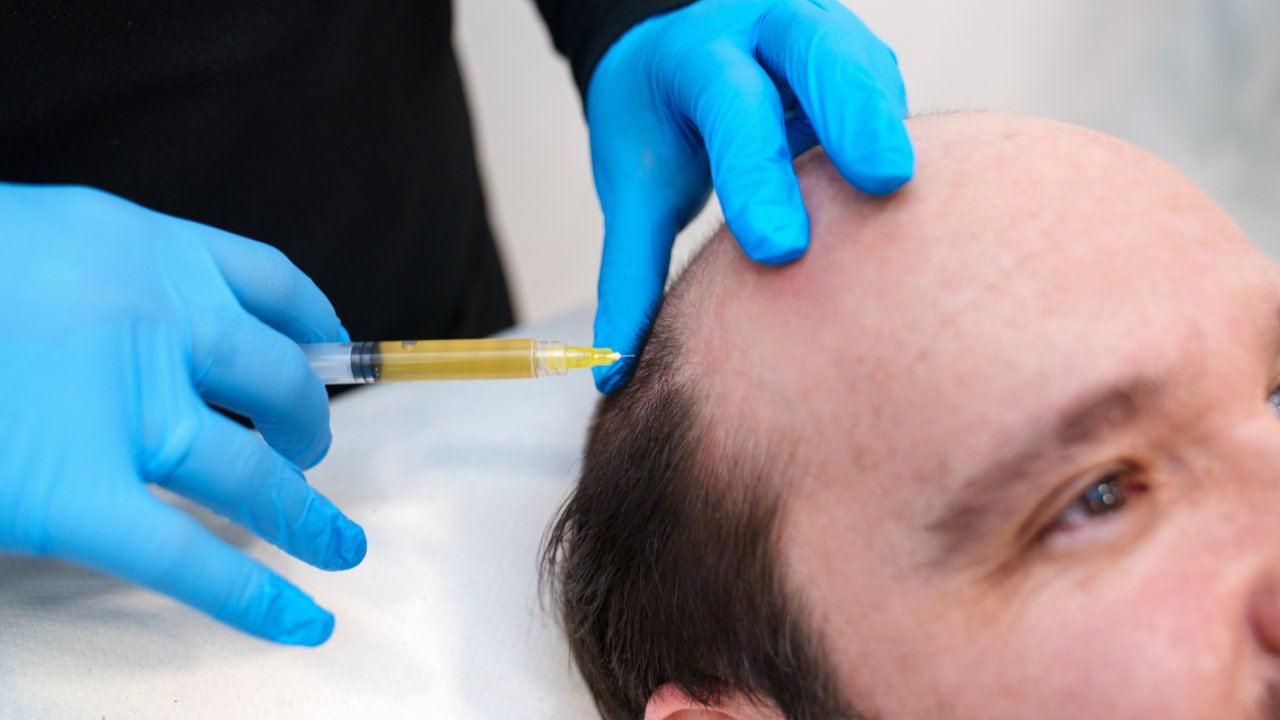
A Hair Transplant Surgeon can review your scalp density, family history, shedding timeline, and signs of miniaturization before recommending care.

Pattern You Notice  What It May Suggest 
Sudden shedding across the scalp Temporary stress-linked shedding
Gradual widening of the part or crown loss Pattern-related loss that may need review 
Patchy loss or scalp pain A medical evaluation may be needed 

Does Low Cortisol Cause Hair Loss?

Low cortisol is less commonly discussed than elevated cortisol, but low readings can reflect adrenal, medication-related, sleep-related, or illness-related issues. Low cortisol is not usually the first explanation, but any long-term hormone disruption can affect the body’s repair systems.

Other causes may matter more. Thyroid hormones, for example, influence growth rate and shedding. Iron deficiency, low protein intake, postpartum changes, autoimmune disease, and hormonal imbalances can also play a role. 

This is why testing only one marker rarely gives the full picture. A better approach is to connect lab results with symptoms, history, and scalp findings.

What Signs Should You Watch For?

You can track patterns at home before your appointment. Focus on changes you can describe clearly.

  • More daily hair fall after a stressful event
  • Visible hair thinning near the part or temples
  • Shedding that lasts longer than three to six months
  • Itching, burning, scaling, or pain on the scalp
  • Fatigue, weight change, heavy periods, or cold sensitivity

These details help your clinician decide whether the problem is temporary shedding, inherited loss, inflammation, or another medical concern. Photos taken once a month under the same lighting can also show whether thinning hair is improving or worsening.

What Can Help Regrowth?

You cannot force immediate regrowth, but you can reduce triggers and support hair health while your body recovers.

  • Improve sleep consistency and reduce late-night screen time
  • Eat enough protein, iron-rich foods, and balanced meals
  • Avoid tight hairstyles, harsh brushing, and aggressive heat styling
  • Manage stress with walking, breathing exercises, therapy, or lighter training blocks
  • Ask a clinician about treatment options if shedding is severe or prolonged

Because healthy hair growth depends on time, nutrition, hormones, scalp condition, and genetics, many people see improvement after the trigger improves. It may take several months to notice fuller coverage.

When to Seek Medical Help

See a clinician if shedding is sudden, patchy, painful, or ongoing. You should also get checked if you have scalp redness, scaling, eyebrow loss, irregular cycles, recent medication changes, or rapid weight change.

Do not assume every shed strand comes from stress. Several conditions can look similar, and early care can protect remaining density. A clear diagnosis helps you choose the right plan, avoid unnecessary supplements, and act before temporary shedding becomes harder to separate from other forms of hair loss.